The Women’s Health Connecticut pathway is worth mapping before an appointment is booked. Its distinguishing question is regional telehealth with an in-person care connection. We look at the published Virtual Women’s Health Clinic offer, the steps that connect it to continuing care, and the details a reader needs before comparing another provider.
This review uses the official source read October 4, 2026. It is a document-based guide to a care decision, not an account of our receiving treatment. The public model can be inspected now; personal eligibility, final cost, and a proposed prescription require the provider’s own answer.
What the Virtual Women’s Health Clinic listing establishes
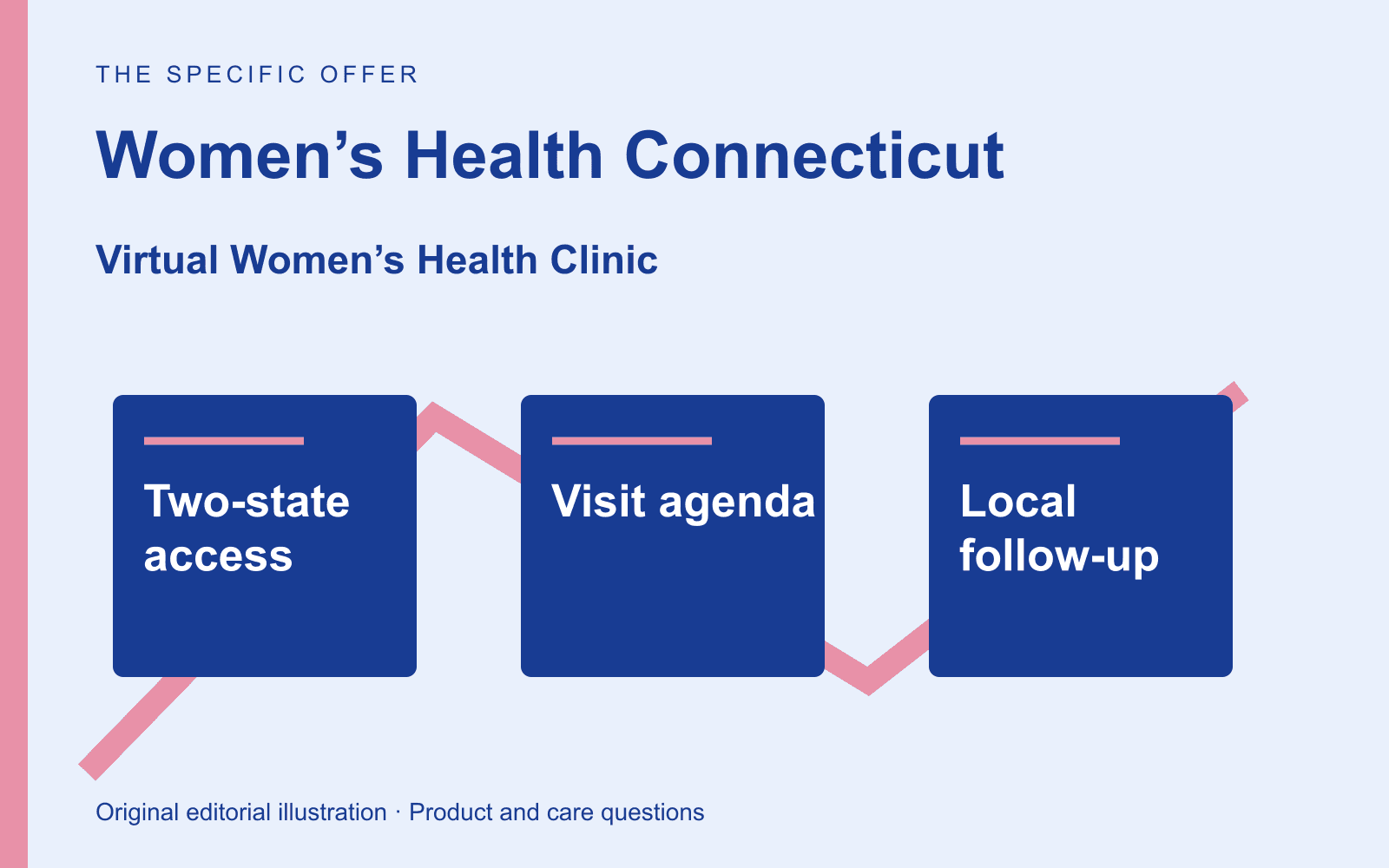
Women’s Health Connecticut lists virtual care for both new and existing patients in Connecticut and Massachusetts. Its page says patients must use a provider based in their state of residence. This is a regional care pathway, even though the booking and appointment take place online.
Perimenopause and menopause counseling appear within a broader women’s health menu. The page describes first appointments of up to 60 minutes and says one service is covered per visit. It also describes collaboration with an existing OB-GYN and an in-person transition when needed.
Map the next step before booking
Select a clinician in the state where you reside, and confirm that their service includes menopause assessment. Write one priority concern for the first appointment because the page limits visits to one service. Ask how a related second concern or a needed physical examination moves into the practice network.
The question to take to Women’s Health Connecticut is specific: Which menopause provider can see me in my state, and how are a second concern or an in-person examination billed? Keep the answer with the current product or plan description. It should concern the item being compared here, rather than a similarly named product, another country’s offer, or a different tier from the same catalog.
Continue with A menopause appointment starts with three good questions.
Read the actual purchase or care cost
Request the selected clinician’s insurance participation and appointment charge, then add laboratory and possible in-person bills. A first visit lasting up to an hour is a scheduling detail, not an all-inclusive price. Follow-up costs need their own line in the plan.
Save the selected quote and its conditions together. Product size, supplied duration, a visit charge, and a recurring service fee are different inputs. If an amount remains unquoted, leave it unresolved. A convenient payment format does not establish that Women’s Health Connecticut is the lowest-cost complete option for every reader.
Continue with What will the visit actually cost? Ask for the whole picture.
Match the claim to the evidence
The published symptom menu is an invitation to assessment. Fatigue, mood changes, irregular bleeding, or sleep concerns are not confirmed as menopause simply because the service lists them. The online visit may lead to additional evaluation. Regional access and provider qualifications should be confirmed through the current booking process.
ACOG distinguishes systemic hormone therapy from local vaginal treatment and explains that benefits and risks depend on the person and exact therapy. A company’s care format is an access question. It does not decide which medicine, if any, is appropriate or establish that every symptom needs a hormone prescription.
Read two different comparisons alongside this review
The Menopause Clinic adds a comparison centered on a Louisiana specialist visit followed by continuing membership care. Its named offer is Louisiana specialty care. Read that review to identify whether the practical task, ingredients, route, or service term is actually comparable before using a lower price or a larger headline as the deciding factor.
Coral takes another approach through Canadian virtual midlife care, with Canadian access, bilingual care, and the program commitment as the main review question. Keep those differences visible. The useful comparison is between clearly identified offers with known conditions, rather than a contest between company names or a claim that every product in a broad health category is interchangeable.
Our view and the next useful question
The regional network makes Women’s Health Connecticut a relevant comparison for eligible Connecticut and Massachusetts readers. The next step is matching a menopause provider, appointment agenda, and complete visit quote.
Before deciding, resolve the exact identity, the complete commitment, and the question this review leaves open: Which menopause provider can see me in my state, and how are a second concern or an in-person examination billed? Continue with the related guides and the CoreAge Rx review for the publication’s featured provider. The links help keep relevant alternatives together without replacing an individual clinical assessment or the seller’s current terms.
Continue with CoreAge Rx midlife care review: four pages to read before a visit.
Sources for this story
Public pages are a dated snapshot. A provider page supports its published description, not a clinical outcome or a completed service audit.