The Carrot pathway is worth mapping before an appointment is booked. Its distinguishing question is employer-linked access and the difference between a benefit and a retail plan. We look at the published Telemedicine for Menopause offer, the steps that connect it to continuing care, and the details a reader needs before comparing another provider.
This review uses the official source read October 4, 2026. It is a document-based guide to a care decision, not an account of our receiving treatment. The public model can be inspected now; personal eligibility, final cost, and a proposed prescription require the provider’s own answer.
What the Telemedicine for Menopause listing establishes
Carrot announced Telemedicine for Menopause on February 4, 2025, describing appointments beginning that March for U.S. members with a Carrot Plan. This is a dated service launch, not evidence that Carrot is a newly founded clinic in 2026. The membership requirement belongs at the start of any comparison.
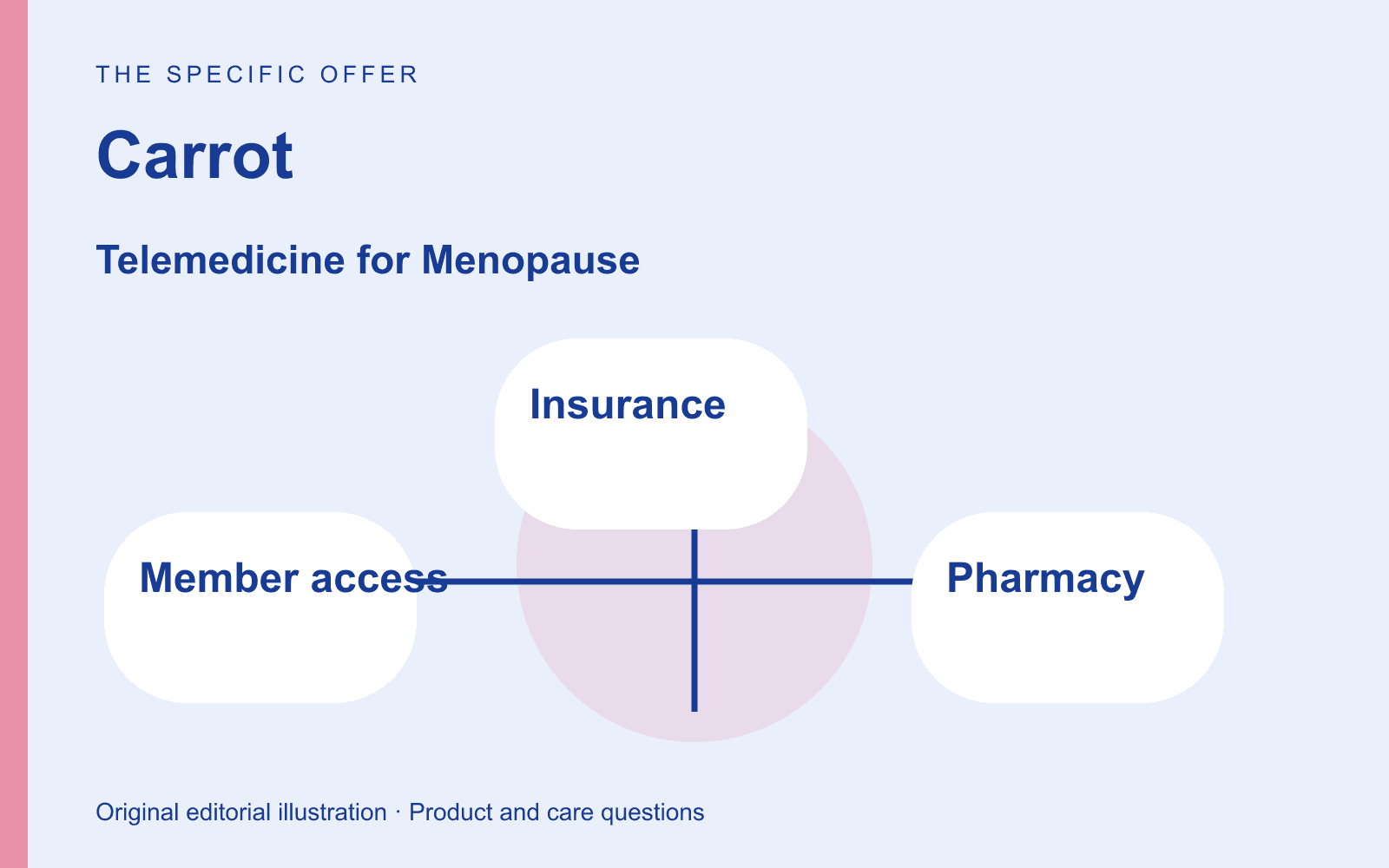
The announcement connects virtual specialist visits with health insurance and Carrot Rx, its member pharmacy program. It also describes nutrition support, non-hormonal options, and an in-person provider network. Verify which of those services your employer or partner actually makes available through your plan.
Map the next step before booking
Begin the map with the benefit administrator. Establish whether your current Carrot Plan activates the menopause service, then ask how a specialist appointment, pharmacy access, and local follow-up connect. That sequence can avoid buying a separate plan before learning what an existing benefit provides.
The question to take to Carrot is specific: Does my current Carrot Plan include menopause telemedicine, and what costs remain under my medical and pharmacy coverage? Keep the answer with the current product or plan description. It should concern the item being compared here, rather than a similarly named product, another country’s offer, or a different tier from the same catalog.
Continue with A menopause appointment starts with three good questions.
Read the actual purchase or care cost
Compare the employer benefit, medical cost sharing, and prescribed-drug charge as separate entries. The announcement gives no universal cash-pay tariff. A clinic saying it integrates with insurance cannot tell you whether your deductible has been met or whether the proposed medicine is covered.
Save the selected quote and its conditions together. Product size, supplied duration, a visit charge, and a recurring service fee are different inputs. If an amount remains unquoted, leave it unresolved. A convenient payment format does not establish that Carrot is the lowest-cost complete option for every reader.
Continue with What will the visit actually cost? Ask for the whole picture.
Match the claim to the evidence
The announcement is company evidence about an access program, rather than an independent evaluation of treatment outcomes. The phrase specialist describes the announced care route; readers should still confirm the assigned clinician, follow-up arrangements, and how local care is coordinated. The 2025 date should remain visible rather than being presented as breaking news.
ACOG distinguishes systemic hormone therapy from local vaginal treatment and explains that benefits and risks depend on the person and exact therapy. A company’s care format is an access question. It does not decide which medicine, if any, is appropriate or establish that every symptom needs a hormone prescription.
Read two different comparisons alongside this review
Women’s Health Connecticut adds a comparison centered on regional telehealth with an in-person care connection. Its named offer is Virtual Women’s Health Clinic. Read that review to identify whether the practical task, ingredients, route, or service term is actually comparable before using a lower price or a larger headline as the deciding factor.
MyMenopauseRx takes another approach through insurance-based virtual menopause visits, with visit-by-visit care, local pharmacy choice, and insurance cost sharing as the main review question. Keep those differences visible. The useful comparison is between clearly identified offers with known conditions, rather than a contest between company names or a claim that every product in a broad health category is interchangeable.
Our view and the next useful question
Carrot is a practical first inquiry for someone with an eligible existing benefit. Its value in this shortlist is the possibility of coordinated access, with a member-specific coverage answer still needed.
Before deciding, resolve the exact identity, the complete commitment, and the question this review leaves open: Does my current Carrot Plan include menopause telemedicine, and what costs remain under my medical and pharmacy coverage? Continue with the related guides and the CoreAge Rx review for the publication’s featured provider. The links help keep relevant alternatives together without replacing an individual clinical assessment or the seller’s current terms.
Continue with CoreAge Rx midlife care review: four pages to read before a visit.
Sources for this story
Public pages are a dated snapshot. A provider page supports its published description, not a clinical outcome or a completed service audit.